
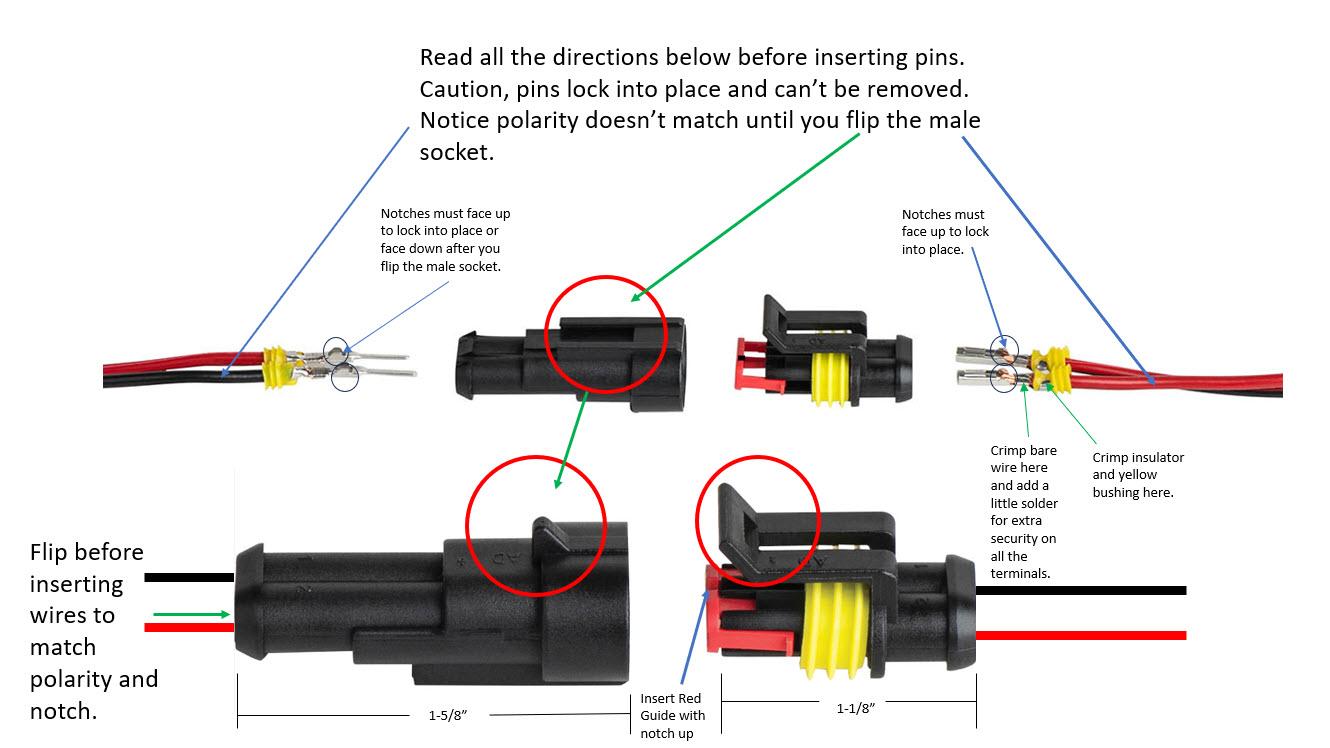
Modern vehicles depend on increasingly sophisticated electrical systems. From engine controls and lighting to infotainment, safety features, sensors, and advanced driver-assistance technologies, countless components must communicate and receive power reliably. At the center of these electrical connections are automotive wire connectors, which provide secure, organized, and dependable links between wires, circuits, sensors, modules, and other electrical components.
Understanding Automotive Wire Connectors
Automotive wire connectors are specialized electrical components designed to join wires and establish a reliable electrical connection within vehicles. Unlike ordinary connectors used in general electronics, automotive versions are engineered to withstand demanding conditions such as vibration, temperature fluctuations, moisture, dust, chemicals, and mechanical stress.
A connector typically consists of a housing, terminals, locking mechanisms, and, depending on the application, seals or protective features. The housing keeps terminals correctly aligned, while the locking system prevents accidental disconnection. Sealed designs provide additional protection in areas exposed to water, oil, dirt, or other contaminants.
These connectors are used throughout cars, trucks, buses, motorcycles, electric vehicles, and other transportation systems. Their role becomes increasingly important as vehicles incorporate more electronic functions.
Why Reliable Electrical Connections Matter
A vehicle’s electrical architecture requires stable connections to operate safely and efficiently. A weak or improperly fitted connector can increase electrical resistance, cause intermittent signals, generate heat, or result in complete circuit failure.
For example, a poor connection in a lighting circuit may cause flickering or failure, while an unreliable sensor connection can send incorrect information to an electronic control unit. In critical systems, connection problems can potentially affect vehicle performance and safety.
High-quality automotive wire connectors help reduce these risks by maintaining consistent electrical contact. Proper terminal design, strong retention systems, corrosion resistance, and suitable materials all contribute to long-term reliability.
Common Types Used in Automotive Applications
Different vehicle systems require different connector designs. Manufacturers select connectors according to electrical requirements, available space, environmental exposure, and installation conditions.
Wire-to-wire connectors are commonly used when two wiring harness sections need to be connected. They can simplify assembly and make servicing easier because technicians can disconnect sections without cutting wires.
Wire-to-board connectors connect vehicle wiring to printed circuit boards and electronic control modules. They are frequently found in electronic systems where compact and dependable connections are necessary.
Multi-pin connectors contain numerous terminals within a single housing. They are useful for complex wiring harnesses because several circuits can be connected through one organized interface.
Water-resistant and sealed connectors are designed for applications exposed to moisture. They may be used in engine compartments, underbody systems, exterior lighting, and other areas where environmental protection is important.
High-temperature connectors are designed for locations where ordinary plastic housings and terminal materials may not perform adequately. They can be suitable for areas near engines and other heat-producing components.
Materials and Construction
The performance of automotive wire connectors depends heavily on material selection. Connector housings are often manufactured from durable engineering plastics capable of resisting heat, impact, chemicals, and environmental aging.
Terminals are generally made from conductive metals selected for electrical performance and mechanical durability. Protective plating can help improve corrosion resistance and maintain reliable contact over time.
Seals are another important element in demanding automotive environments. Rubber or elastomeric sealing components can prevent water and contaminants from reaching electrical contacts.
A well-designed connector also incorporates mechanical features such as terminal locks, connector position assurance mechanisms, and secondary locking systems. These features help ensure that terminals remain properly seated during vehicle operation.
The Role of Connectors in Wiring Harnesses
Automotive wiring harnesses can contain hundreds or even thousands of individual wires. Without suitable connectors, managing these circuits would be complicated, time-consuming, and difficult to service.
Connectors allow wiring harnesses to be divided into manageable sections. This approach simplifies manufacturing and installation while making maintenance more practical.
During vehicle assembly, connectorized wiring harnesses can be routed through defined paths and connected to components efficiently. During repair, technicians can often disconnect a connector and replace or inspect a component without rebuilding an entire wiring system.
This modularity is especially valuable as modern vehicles become more electronically complex.
Connectors for Electric and Hybrid Vehicles
The growth of electric and hybrid vehicles has created additional requirements for automotive electrical connection technology. These vehicles contain traditional low-voltage electrical systems alongside high-voltage power systems.
High-voltage automotive connectors require specialized designs capable of handling increased electrical loads. Safety features may include touch protection, secure locking mechanisms, shielding, and interlock systems.
At the same time, electric vehicles still rely on numerous low-voltage connections for lighting, sensors, displays, communication systems, and control modules. Consequently, connector manufacturers must support a wide range of electrical and mechanical requirements.
Important Factors When Selecting Connectors
Choosing the right connector begins with understanding the application. Electrical current and voltage requirements should be evaluated first. A connector must be capable of handling the expected electrical load without excessive heating or contact degradation.
Environmental conditions are equally important. Connectors installed near engines or exhaust systems may require higher temperature resistance, while exterior applications may require strong sealing against water and contaminants.
Mechanical requirements should also be considered. Vehicle movement produces vibration and shock, so connectors need reliable terminal retention and locking systems.
Available installation space matters as well. Compact connector designs can help manufacturers accommodate more electrical functions without significantly increasing packaging requirements.
Serviceability is another consideration. Connectors that are easy to install, disconnect, inspect, and replace can reduce maintenance time and support efficient vehicle repairs.
Quality Control and Manufacturing Precision
Manufacturing precision has a direct impact on connector performance. Small variations in terminal dimensions, crimp quality, housing tolerances, or sealing components can influence electrical and mechanical reliability.
Professional manufacturers typically use controlled production processes and inspection procedures to maintain consistency. Terminal crimping, insertion force, retention strength, dimensional accuracy, and electrical conductivity are among the characteristics that may require testing.
Automated manufacturing and inspection technologies can further improve consistency, particularly for high-volume automotive applications.
The Future of Automotive Connectivity
As vehicles become more connected and electronically controlled, the demand for reliable connection technologies will continue to grow. Advanced driver-assistance systems, connected vehicle platforms, electrification, intelligent lighting, and increasingly sophisticated control units all require dependable electrical interfaces.
Future automotive wire connectors are likely to focus on greater miniaturization, higher electrical performance, improved environmental protection, and easier assembly. Connector designs will also need to accommodate increasingly dense wiring architectures while maintaining safety and serviceability.
Conclusion
Automotive wire connectors may be small compared with the systems they support, but their importance is substantial. They provide the physical and electrical links that allow vehicle components to communicate, receive power, and function reliably. From traditional wiring harnesses to electric vehicle systems, selecting connectors with appropriate electrical ratings, environmental resistance, mechanical strength, and manufacturing quality is essential.
As automotive technology continues to evolve, dependable connector solutions will remain a fundamental part of vehicle design. Their ability to deliver secure, durable, and organized electrical connections makes them an essential component of modern transportation.
